Dental Implants in Noblesville, IN

Missing teeth don’t usually announce themselves loudly. It’s smaller stuff. Chewing on one side. Avoiding steak. Catching yourself smiling with your lips closed. Over time, it adds up.
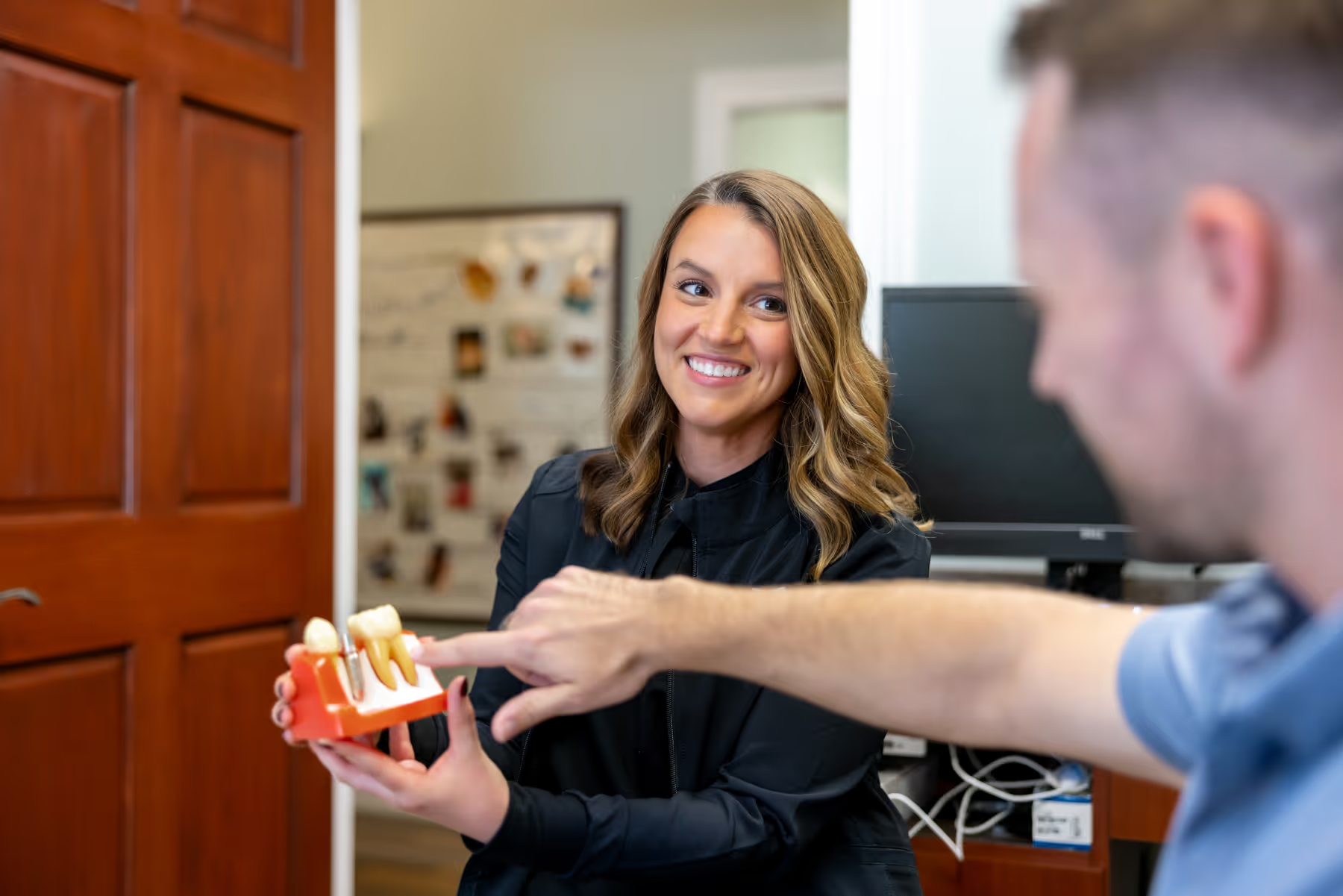
At Mouchaham Dentistry, dental implants are placed and restored in the same office, by the same team. No referrals across town. No guessing who’s responsible for what. You meet with Dr. Laura Mouchaham, talk through your options, and move forward at a pace that makes sense.
What are dental implants?
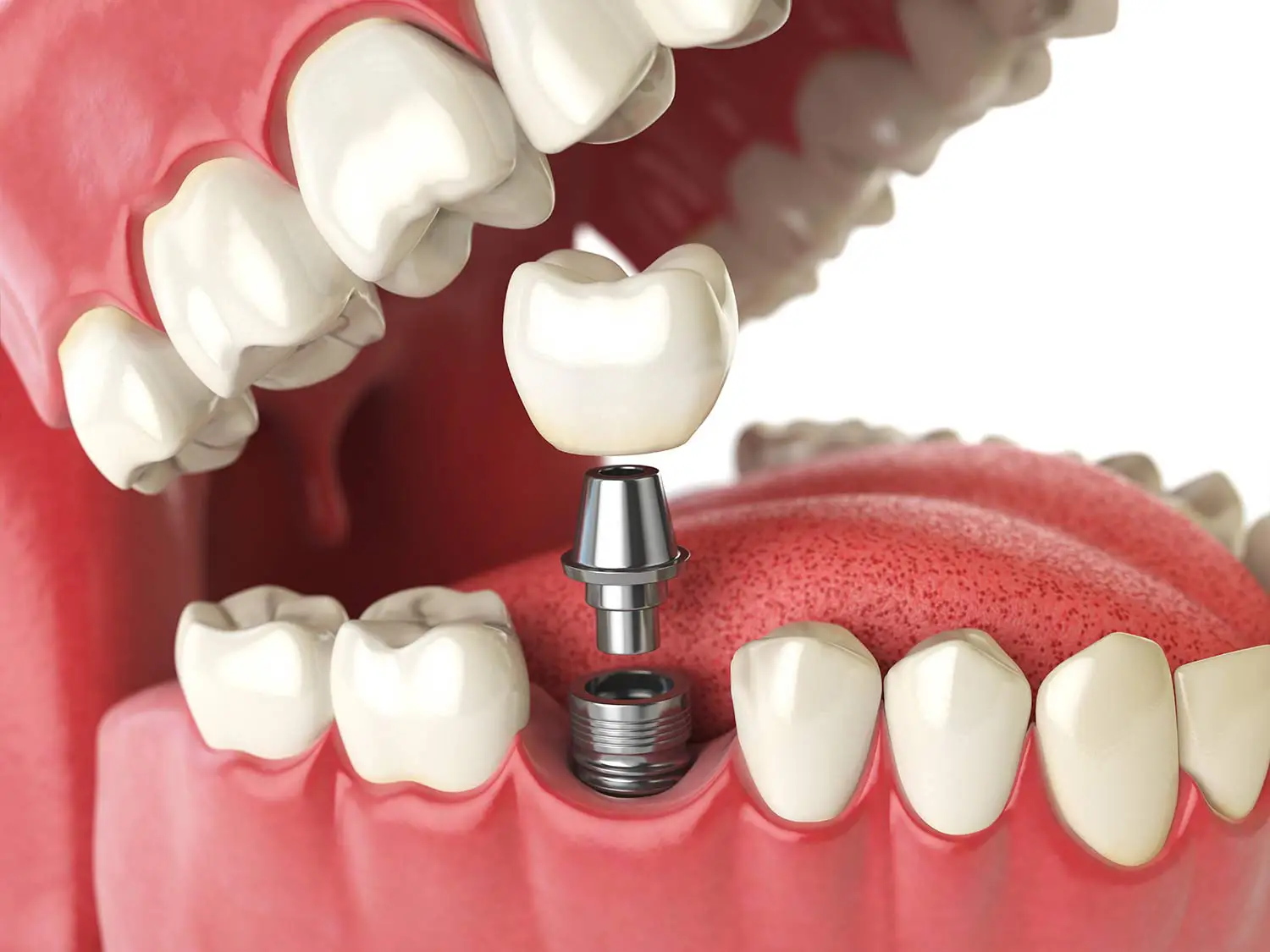
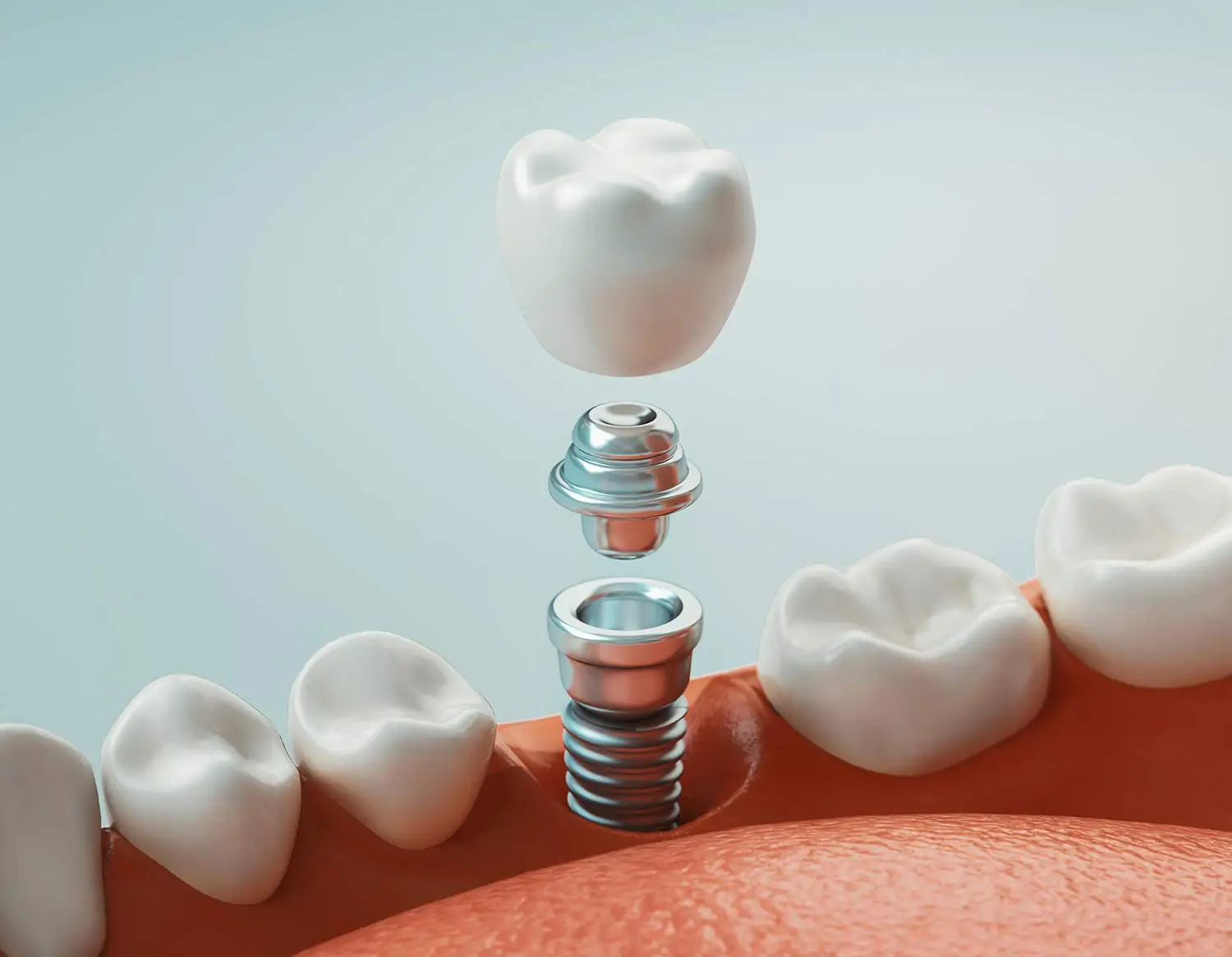
A dental implant replaces the root of a missing tooth, not just the visible part. The implant is placed into the jawbone, allowed to heal, and later supports a crown, bridge, or denture.
Once it’s healed, it stays put. You don’t remove it at night. You don’t worry about it shifting while you eat. Most patients stop thinking about it altogether, which is usually the goal.
We plan implant placement using 3D CBCT imaging so the position, angle, and depth are mapped out before surgery. Fewer unknowns. Better healing. Less stress.
Why implants instead of a bridge or denture?
Bridges and dentures still have their place, but many patients come in after years of adjusting, re-adjusting, and working around them.
Dental implants tend to work better long-term because they:
- Stay stable during meals and conversations
- Help maintain jawbone strength
- Don’t rely on nearby teeth for support
- Feel closer to natural teeth
- Hold up for years with normal maintenance
Some people are missing one tooth. Others haven’t chewed comfortably in a long time. The approach changes, but the goal stays the same: something solid that doesn’t feel temporary.
Dental implant services available for Noblesville patients
Single dental implants
Used to replace one missing tooth without affecting surrounding teeth. A custom crown is placed once healing is complete.
Implant-supported bridges
When multiple teeth are missing in a row, implants can support a fixed bridge instead of trimming down healthy teeth.
Implant-supported dentures
These anchor into place rather than resting loosely. No adhesives. No shifting. Many patients notice the difference right away when eating.
Full-arch implant solutions (All-on-X)
A full set of teeth supported by strategically placed implants. Often chosen by patients ready to move on from traditional dentures.
Bone grafting
If the jaw needs reinforcement before implants can be placed, grafting can rebuild the foundation. This is handled in-house when needed.

What happens at the first implant visit?
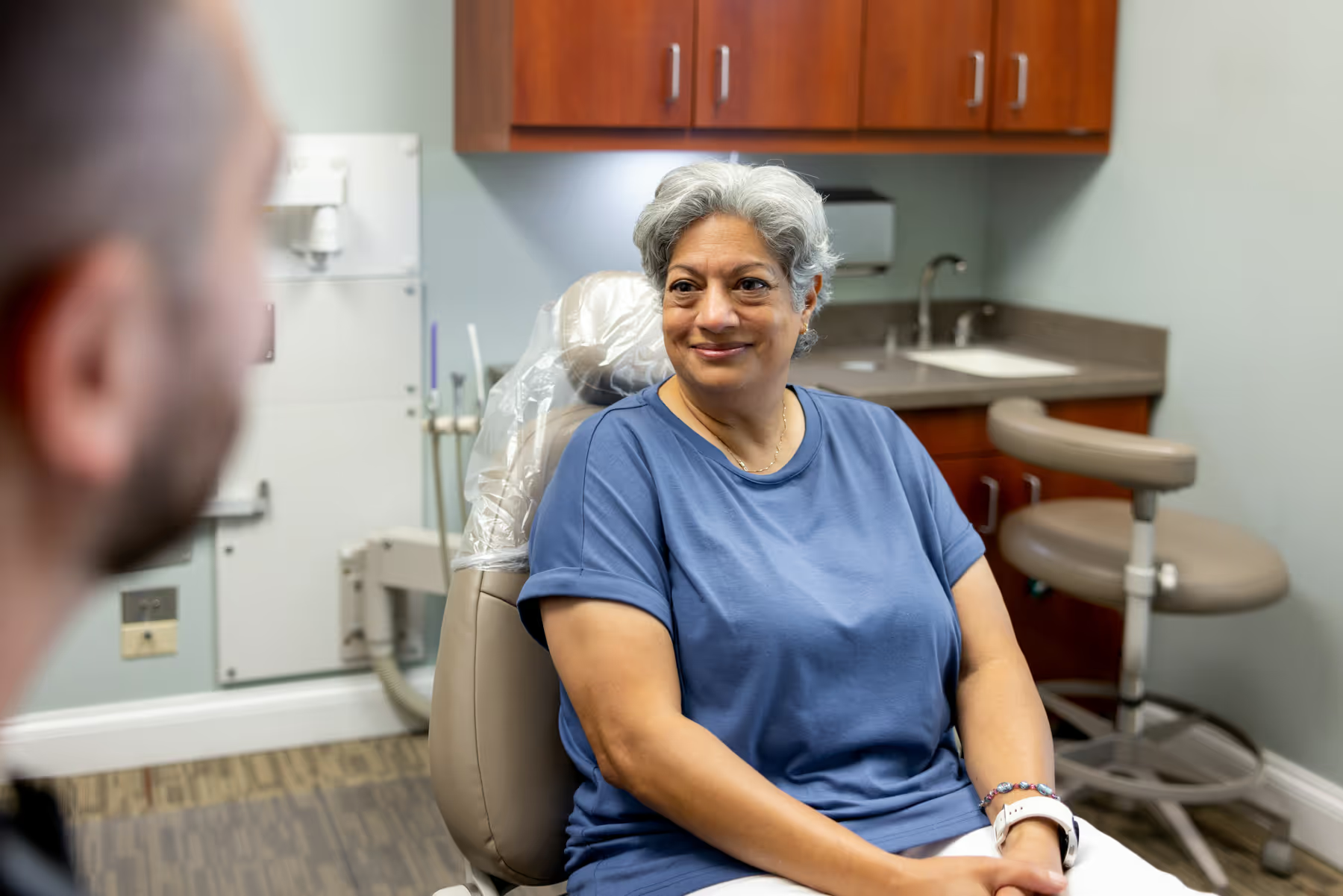
The first visit is mostly planning. We review scans, talk through your dental history, and focus on what’s been frustrating you day to day. Some people want to talk through every step. Others want the short version. Both are fine.
If surgery is part of the plan, IV sedation is available. Many patients choose it simply because it makes the appointment feel easier and faster.
Are dental implants right for me?
Implants may be a good option if you:
- Have one or more missing teeth
- Want something that doesn’t move or come out
- Are you tired of dentures or removable appliances
- Have gum issues that can be treated first if needed
Patients who were told “no” years ago are sometimes surprised by what’s possible now with updated imaging and techniques.
Dental implant FAQs
Are dental implants painful?
Most patients describe pressure rather than pain. The area is fully numbed, and sedation is available. Mild soreness afterward is common and usually short-lived.
What does recovery look like?
Many patients return to normal routines within a day or two. Swelling and tenderness improve steadily over the following days.
How do I care for a dental implant?
Daily brushing, proper flossing, and a water flosser help keep the area clean. Regular dental visits matter too, implants still need monitoring.
Are implants safe for older adults?
Yes. Many implant patients are in their 60s, 70s, and beyond. Overall health matters more than age.
How much do dental implants cost?
Costs vary based on how many implants you need and whether additional procedures are involved. We review estimates clearly and offer financing options.
Dental implants in Noblesville, IN
Dental implants can change how you eat, talk, and smile without having to think about your teeth all day. Our office serves patients throughout Noblesville and nearby communities.
Call (317) 844-2810 or request an appointment online to schedule an implant consultation.